Tuesday, 21 July 2026

Exclusive: the story behind the boardroom coup at the Royal Kennel Club - and why we should all be worried


In April 2023, the Kennel club was awarded a prestigious Royal prefix - becoming The Royal Kennel Club. Not gonna lie, I was gutted. I didn't think the Kennel Club deserved it.

I am told the late Queen was shocked by Pedigree Dogs Exposed and recognised the issues. She had been the official patron of the Kennel Club since 1952 and had visited Crufts at Olympia in 1969, but she never went back. Her passion was for working Labs and spaniels - well, apart from the Corgis of course. She also happily embraced the "dorgis" that were initially the result of a misalliance between one of her Corgis and her sister's Dachshund. The story goes that when the Kennel Club commissioned a portrait of the Queen in 1975, she insisted that a favourite dorgi, Tinker, was included in the painting.

It was a fantastically subversive move by the late Monarch and it tickles me that the Kennel Club had no choice but to smile and say "yes ma'am".

© The Kennel Club

The Queen died in 2022 - seven months before the KC was given royal status by her son, King Charles III, to mark the Kennel Club's 150th anniversary.

Charles took over from his mum as patron of the Kennel Club, but he too has never visited Crufts and his breed of choice is the tufty-tufty Jack Russell Terrier. Last year he was, apparently, gifted a Lagotto Romagnolo called Snuff but no official photographs of the dog have ever been released.

The impression has always been that, despite the royal patronage, the late Queen and her son were not particularly enamoured with the show-world and had some awareness of the harms caused by purity-breeding. So I was genuinely shocked that an organisation that embraces a culture/breeding paradigm that has continued to harm dogs was given Royal status.

I decided, rather petulantly, that I was going to continue to refer to the organisation as just The Kennel Club. And I held out until last summer when Ian Seath was appointed Chairman on a ticket that promised a genuine commitment to health and making the KC more inclusive/less insular - in my view a necessary shift in focus given falling registrations and income on the current registration/show-scene model.

Particularly useful, I thought, is that Ian's career - outside of the dog world - spans R+D, HR, marketing, product development, IT and consultancy. He also has a science degree and is co-author of several peer-reviewed papers on canine health - a far cry from former Chairman Ronnie Irving who told me in Pedigree Dogs Exposed: "I don't want a bunch of scientists telling me what to do."

I first met Ian on the Eurostar some years ago on the way to a meeting of the International Partnership for Dogs in Paris. There was none of the defensive caginess I was accustomed to when meeting dyed-in-the-wool kennel club folk (barely disguised hatred sometimes, even).

It was quickly obvious that Ian understood the issues, even if he did breed Dachshunds (albeit the healthiest, most conformationally-normal variety - the standard wire). He had also done an enormous amount of work on health in the breed - several health surveys and a commitment to transparency even if the findings were uncomfortable.

I found him so refreshing that I think I even tipped him in a blog I wrote at the time as a future Chairman of the KC.

Despite what people think, I have always wanted the Kennel Club to be a success. Nothing would make me happier than a reformed, science-led Kennel Club that is a true champion for all dogs. So the promise of someone who seemed to embrace this agenda was a woo-hoo moment. Ian Seath's career expertise has been all about encouraging/coaching organisations to do better and there's no doubt he understands the threat from European legislation which is clamping down on conformational extremes and even dog shows themselves.

Also, he isn't a freemason (The Kennel Club has its own lodge). And yes, I know they do good work, but.... There has also been a spectacular failure by anyone to dig up any scandal about him other than that his wife has allowed her stud dogs to be used on non-KC-registered working Teckels. The RKC dirt-dishing FB account Clarges St Cat nicknamed him The Grey Man - but frankly that's something of a compliment given the page's allegations about past Chairmen and several board members.

The mood music from Clarges St in the past year has been extremely encouraging - lots of focus on health; a brilliant new small-populations project highlighting the importance of genetic diversity and the development of a new nose-to-tail veterinary assessment. It's all part of the new Health Framework launched in January this year - work that is independent of Ian but was very much supported by him.

Click to enlarge


It has also been good too to see Ian get out and about a lot - not just to shows but to the wider dog world, including the agility, working and obedience communities which don't get so much of a say in what the Kennel Club does.

Crufts 2026 was a bit of a car-crash given the Best in Show Clumber with severe ectropion (and an owner who had been charged, two decades ago, with neglect of his dogs) but overall it has felt like the Royal Kennel Club is turning a corner.

Behind the scenes, though, there have been rumblings that some didn't like the direction of travel. To understand why, you need to understand the make-up of the Kennel Club.

The Club is governed by a Board of Directors which is legally responsible for strategy, finances and oversight. The board appoints the Chief Executive who runs the Club's day-to-day operations and oversees about 200 staff. The board also appoints the Chairman - which is an honorary, expenses-only position albeit one that comes with a lot of prestige (and perks if you're into fine dinners and hobnobbing). The chairmanship is voted on every year, but most Chairmen remain in post for some years. Ronnie Irving was Chair for nine years, Steve Dean for four years and Tony Allcock for six years.

Critically, the directors are drawn from - and elected by - KC members. There are around 1500 of them and the important thing to know about KC members if that they are mostly current and former show breeders and judges - traditionalists steeped in Kennel Club culture.

The KC board (of 24) reflects this. There is currently only a couple of directors from the agility/obedience world and none at all from the working-dog world and so show breeders dominate.

Many still hark after the good old days - when they could do what they want with very little outside scrutiny; when the public bought in to the story that pedigree dogs were special and when the Kennel Club didn't have to spend a small fortune firefighting bad PR.

In reality, the good old days are long gone. Their flagship show Crufts still turns a profit but there's been a catastrophic drop in registrations (the KC's main income) and show entries have dwindled with fewer new people coming into the sport. Overall, the dog-show/activities side of the KC now runs at a loss.

Bad publicity costs the RKC dear. In 2008, Pedigree Dogs Exposed pushed the KC from an operating profit of £500k the year before into an £800k deficit - a consequence of hiring both a pricey PR firm to address the reputational damage and very expensive London lawyers (Schillings) to fight the Ofcom complaint the KC raised against the programme. I understood the KC's knee-jerk reaction to defend itself but the money would have been better spent tackling the issues raised in the programme rather than defend the status quo.

And yet, despite dwindling relevance and reputation, the instinct of many within the Kennel Club is to double down on what has always been its core business - dog shows, pedigree dogs and a gentleman's club in London's Piccadilly offering a three-course silver-service lunch. They blame what has been a precipitous fall from grace on a hostile outside world that, if only they get the optics right, will come round. After all, don't they love their dogs? Are they not doing an amazing job of preserving an invaluable cultural heritage? And when it's pointed out that many breeds don't look anything like the dogs of 100 years ago, they will maintain that it has been in the name of betterment, despite the wealth of evidence that in many breeds it has been to their detriment.

So what of the new Chairman, Gavin Robertson, appointed in something close to a boardroom coup on June 30th?

Without a shadow of a doubt, Gavin is show royalty - in the UK and overseas. He's been showing and breeding dogs since he was a child and is a senior championship show judge. He has bred over 90 UK champions and won Crufts in 2013 with the Petit Basset Griffon Vendéen Ch Soletrader Peek A Boo ("Jilly"). He also bred the Westminster 2023 Best in Show winning PBGV (Am Ch Soletrader Buddy Holly).

The vibe from some on the show Facebook pages after Gavin was appointed was one of relief... that it means a return to the RKC's raison d'être. "Us mere members, exhibitors and judges will be hoping you can bring order and pride back to the world of pedigree dogs," wrote one breeder on Gavin's FB timeline. "Congratulations Gavin. May common sense return to the RKC," wrote another.

But for many of us lobbying for the improved health of pedigree dogs, it felt like a bereavement. Boxer breeder Tim Hutchings , in a comment on Ian's Facebook page, spoke for many when he wrote: "Thank you for your incredible hard work, your integrity, your freedom from ambition, your normality, your absolute decency and for your 100% straightforward approach."

Facebook posts from the outgoing and incoming Chairs were revealing.

Click to enlarge


Click to enlarge


What struck me most was Ian's closing line - "It's all about the dogs" - compared to Gavin's reference to the sport.

Gavin runs a breeding and boarding kennels and dog grooming parlour in Oxfordshire, from where he also runs a small company supplying high-end dog and cat housing. His Linked-in profile lists no higher education or business experience outside of his own. But, clearly, he has lived and breathed show-dogs all his life.

He will, am sure, be running on a ticket of positivity about pedigree dogs - an approach he took after his 2013 Crufts'win when he embarked on a 130 mile walk with his PBGV Jilly. The idea was to promote pedigree dogs as fit for function and to raise money for some genuinely good causes (inc Great Ormond Street and Dog Lost).

"I am so proud of Jilly for winning Crufts and wanted to use the profile that her win gave us to do something for deserving causes," said Gavin at the time. "Outside of the show ring Jilly is such an active dog, so I know she'll have no problem walking 130 miles."

"The dogs that compete at Crufts have to be in great shape so she will be well-prepared for this challenge," said the Kennel Club.

It was a great idea - and would have been even better if Jilly had actually walked the whole way. But she didn't. For some of the walk they used another dog, while Jilly was transported in a van. This was spotted by chance by dog show photographer Sue Thatcher on one of the legs of the walk.

"Everyone was waiting for Gavin and the team to arrive at the Three Locks Pub at Stoke Hammond," she says. "They were all waiting outside the pub. But I had parked in the canal car park on the other side of the road and as I walked out of it I saw a blue van parked up the road. The door was open and outside on the blind side of the van there was a dog on a lead that I thought looked like Jilly. "To be honest, I didn't think much of it. It was only later when I looked at the pictures that I and others had taken along the route that I realised that the dog Gavin Robertson is walking in many of the photographs is clearly not Jilly." (Jilly's Jolly Jaunt Facebook page)

Although Gavin later claimed that he had never said that Jilly would walk all the way, to me it felt typical of the sleight of hand I have so frequently seen from both the Kennel Club and breeders. Too often, the "responsible breeder" veneer cracks when you look in-depth at their breeding practices - sometimes because they're not actually doing the health testing they claim distinguishes them from "back-yard" breeders; other times because of profligate inbreeding or because they're oblivious to the harm they're causing through the pursuit of a particular, rosette-winning look.

In Our Dogs two weeks ago, Gavin expressed a commitment to see through governance reform and health initiatives. I hope that happens. And I hope his commitment to health extends fully to his own breed, the Petit Basset Griffon Vendéen, which suffers from an awful eye disease - Primary Open Angle Glaucoma (POAG). It generally manifests around three or four years old and can be excruciatingly painful.

Affected dogs can lose their sight - and sometimes their eyes.


"This disease is difficult to manage because it is often silent in its approach and, by the time the diagnosis is made, the dog's sight is often badly affected " writes eye specialist Professor Peter Bedford on the PBGV UK Club's website. "Once the process starts it is almost impossible to control. The earlier the diagnosis, the better the chance of effective treatment."

Today, all PBGV owners are urged to have their dogs' eyes checked regularly for early signs of the disease, the most common of which is elevated intra-ocular pressure.

The mutation is a simple recessive, meaning that pups have to inherit two copies of the mutation (one from each parent) to be affected. These dogs will almost certainly develop glaucoma if they live long enough. Carriers will not develop the disease - but will pass the mutation on to about half of their offspring.

The mutation, in a gene called ADAMTS17, was found by the genetics team at Animal Health Trust in 2015. Among the 311 dogs tested during the first year that the DNA test was commercially avaiilable, 19 were genetically affected (about 1 in 16), 146 were carriers (about 1 in 2), and 146 were clear (about 1 in 2). Put simply, half the dogs were carrying at least one copy of the glaucoma mutation - extremely high.

The team at the AHT, led by Cathryn Mellersh, had found that the mutation had most likely come into the breed in the UK via a single French dog - which just goes to show what can happen in a numerically small breed with a lot of inbreeding.

Nevertheless, given that PBGVs are mostly reputably bred by Kennel Club breeders under the auspices of the PBGV Club, the scientists estimated that it should only take about 15 years for the disease to be eliminated in the UK stock. (Only 85 PBGV were registered by the RKC in 2025 and only two in the first quarter of 2026 so it is, numerically, a very small breed in the UK).

The advice to breeders was to continue using carriers in the short-term (so as to minimise the impact on genetic diversity), to test all breeding stock and then to slowly reduce the frequency of the mutation by choosing clear dogs where possible.

However, 11 years on, many of Gavin Robertson's Soletrader PBGVs are still carriers.

I asked the new Chairman about this in a series of questions I put to him for this article.

He replied: "The mutation was identified by Dr Mellersh's team, published in 2015, and the DNA test has been available to breeders ever since. When it arrived, the breed was told to expect that a very high proportion of dogs would carry it and breed carriers to clear and bring the frequency down generation by generation - because you cannot responsibly empty a small gene pool overnight, and every geneticist and ophthalmologist who has advised us has said exactly that."

But it is not this open-ended according to the PBGV Club UK, of which Gavin is Vice- President. There it states: "As part of her Animal Health Trust work Cathryn Mellersh produced a valuable and useful paper on the subject giving advice that Carriers should always be included in the first one or two generations that follow the launch of a DNA test for a recessive mutation. This...gives breeders the opportunity to capture desirable traits, such as breed type and temperament, before they start to select for dogs that are Clear of the mutation."

In fact, there have even been two Soletrader carrier x carrier matings since the DNA test was launched.

Gavin maintains that one was an accidental mating - and the other a record-keeping error. "The earlier one, years ago, a bitch got in whelp before I knew it, and I had to DNA test two males to establish the sire, who turned out to be a carrier.

"I informed The Kennel Club at the time, and there are records of that," he says. "The affected dog from those litters has been monitored and cared for. Mistakes happen in any kennel. What matters is what you do about them, and I chose transparency rather than hiding the facts."

Gavin has declined to name the dogs involved in this mating - or to answer a question about a mating last year between Soletrader Happy as Larry (who is a carrier) and Soletrader Fun Times for Rangali for whom there is no POAG test listed on either the RKC or PBGV Breed Archive websites.

But the dogs involved in the second carrier x carrier mating that Gavin admits to are known. They are Soletrader Buddy Holly and Soletrader Missy Elliott - both listed as carriers on the RKC. They produced a litter of five pups born on 29th April 2025. The pups' POAG status is not as yet listed on the RKC website, although I imagine it is known. It looks like Gavin has kept two pups - Soletrader Puppet Master and Soletrader Golly Miss Molly - for his show stable.

The mating was, says Gavin, his mistake. "I keep a breeding chart and a bitch was written up as clear when she was in fact a carrier," he admits. "That is on me."

Gavin has also produced an affected dog from a carrier x carrier mating that predates the DNA test (ie not his fault). The parents were Gavin's famous Crufts champion Jilly and Soletrader Dunc N Disorderly - both subsequently found to be carriers.

This mating produced Soletrader Annie Mac, whose DNA test in April 2015 revealed that she was homozygous for the POAG mutation - affected. She went on to be a successful show-dog - a champion in both the UK and USA.

Disturbingly, Annie Mac has since been bred twice (both times to clears) - once in the US (a litter of three born in January 2018) and once in the UK, resulting in a singleton pup born in February 2020. This was eight months after a BVA/KC/ISDS eye test in June 2019 certified that she was clinically affected with POAG and had elevated intra-ocular pressures. The standard treatment, in order to protect her sight, would have been to start eye drops that lower the pressure.

The problem - apart from the fact that every single pup born from an affected will be a carrier - is that the class of drugs used to treat canine glaucoma (prostaglandins) are the same ones used to terminate pregnancy in dogs. In both humans and dogs, labels warn against their use in pregnant or nursing animals. In dogs, the meds can cause partial abortion - the resorption (loss) of embryos.

Breeding from Annie Mac set up a direct conflict between her sight and her pregnancy. And it could also explain why she only had one pup.

Gavin has declined to answer a question asking if he knew that the drugs were dangerous in pregnant and lactating bitches.

The second problem is that breeding from a glaucoma-affected dog is also against explicit published guidance at every level: the European College of Veterinary Ophthalmologists states for primary glaucoma "NO BREEDING from the affected animal" (ECVO Manual, 2024); the RKC itself advises "we do not recommend that you breed from a dog that has been affected by glaucoma" ; and the BVA/KC Eye Scheme holds that "dogs affected by known inherited eye conditions should not be bred from" . Breeding Annie Mac breached the guidance of the specialist veterinary body, the national kennel club, and her own breed's health scheme.

Gavin's response: "I bred [Annie Mac] to a hereditary clear dog, which produces carriers but never affected puppies, and she had a single carrier pup in February 2020. She developed clinical signs only much later in life, which was managed with drops. She died only just recently, aged nearly thirteen, of old age and not of POAG. She spent her retirement in a pet home with someone I know well and see regularly, went for her pressure checks, and was on drops in her later years to keep her comfortable. She had a good, long life."

Cathryn Mellersh, now at the University of Cambridge where she is head of the Canine Genetics Centre, is uncomfortable about carrier x carrier matings: "Carrier to carrier matings simply should not happen once a DNA test is available. I also don't really like breeding with affected dogs for two reasons," she says. "The first is in consideration for the bitch as she could be in pain or on medications that might affect the pups. This will vary with disease and age of onset, but should be considered. Second, it will produce a litter of all carriers, so won't help reduce the mutation frequency at all. It won't produce any clear dogs that could potentially be bred on from. If the affected parent is exceptional, or free of another common mutation, then it might be justifiable, but it should be looked at carefully."

A clue as to why the ADAMTS17 mutation took hold in the breed might be because the gene also plays a role in skeletal growth. A second paper from the AHT, in 2019, found that dogs that were homozygous (ie had two copies of the mutation) were shorter and more compact than dogs without the mutation - attributes that at least historically were actively selected for after the breed was split genetically from the larger Grand Basset Griffon Vendéen in the 1970s (prior to this, interbreeding was allowed).

Essentially, any selection pressure favouring the shorter or more compact dogs would inadvertently co-select the disease allele, because the shorter dog is more likely to carry it.

Another area of concern is that Gavin has talked openly about how he likes to inbreed/line-breed.

Annie Mac, for instance, was very inbred with a COI of 27.3% according to the RKC website. (Her father is also her great grandfather and her great-great grandfather).

Click to enlarge


In an interview with Ante Lucin dating from 2021, Gavin says: "With our breed, because they are not a standard shape.... I do a lot of line-breeding.. I am a huge fan of doing line breeding and I know now you have to be careful of two much inbreeding but I am a huge fan of half-sister/half-brother.. this sort of combinations that really cement [the look]" 

I asked him if this was still his view on inbreeding and if so how he balances it with the need to retain genetic diversity in a small breed.

"No serious breeder in a small population breed can ignore diversity, and I do not," he says. "I breed to the whole dog, not to a single trait and not just to eye status, and I plan several generations ahead. As a long term breeder, I have used dogs from all over the world to open up the gene pool as best possible, taking in health and breed type as the main factors.

"What I mean by 'cementing type' is breeding consistent, healthy, fit-for-function dogs, not narrowing the gene pool for its own sake. After a good many years and a great many healthy dogs, I would say we get it right far more often than not."

I asked if he felt he should be setting a better example.

"The genetics of POAG in the PBGV began to be investigated around 15 years ago," he says. "I was helpful during the original research, providing DNA from affected and clear dogs and helping to raise funds. I contributed more dogs to the research programme than anybody else in the UK.

"Overall, my view is that we should breed on the best genetic and veterinary advice available. Reduce a problem steadily rather than recklessly. Be open about mistakes. Look after every dog for its whole life. And engage with new science instead of hiding from it. As a breed in the UK, breeders like myself welcome and embrace new veterinary health recommendations to improve the wellbeing of this breed."

The best veterinary advice, clearly, is to not breed from a dog with glaucoma.

As my old mum (and René Descartes before her) used to say: "Watch what people do, not what they say".

Gavin Robertson is a successful breeder who is personable and articulate and the RKC is much more than just its Chairman. But I fear the Board has made a poor choice in someone that may keep the show-breeders happy but does not appear to have the bigger-picture experience, education or financial acumen of his predecessor.

There is no doubt that the Kennel Club is now at a crossroads. It cannot survive as a viable force without diversification; without increasing its relevance to the wider dog-owner public or without continuing to embrace health reforms that mean some quite fundamental changes in the way we breed dogs. This won't be done by PR spin - and it needs to be headed up by someone who sets an exemplary example on health.

I spotted this comment on Ian Seath's Facebook a few days ago - from border collie breeder, Jill Spurr.

"It seems to me that the RKC is at an 'adapt or die' juncture," she wrote "and in order to keep the historic part people hold dear, members need to be ready to embrace change. It's really quite astounding that RKC is not thriving when the pet care industry in the UK is worth around £10 billion, the lion's share being on dogs. It's constantly subject to premiumisation too, and earmarked by capital investment specialists as a growth area. If the Board isn't asking why legacy brands like RKC and Crufts aren't part of that growth, they aren't asking the right questions."

Or possibly just not liking the answers.


References

Forman OP, Pettitt L, Komáromy AM, Bedford P, Mellersh C (2015). A Novel Genome-Wide Association Study Approach Using Genotyping by Exome Sequencing Leads to the Identification of a Primary Open Angle Glaucoma Associated Inversion Disrupting ADAMTS17. PLOS ONE. 

Jeanes EC, Oliver JAC, Ricketts SL, Gould DJ, Mellersh CS (2019). Glaucoma-causing ADAMTS17 mutations are also reproducibly associated with height in two domestic dog breeds. Canine Genetics and Epidemiology 6:5. https://cgejournal.biomedcentral.com/articles/10.1186/s40575-019-0071-6

Bedford PGC (2017). Open-angle glaucoma in the Petit Basset Griffon Vendéen. Veterinary Ophthalmology 20:98–102. https://pubmed.ncbi.nlm.nih.gov/26945802/

European College of Veterinary Ophthalmologists (2024). ECVO Manual — Chapter 8: Breeding advice. ("NO BREEDING from the affected animal" — primary glaucoma.) https://www.ecvo.eu/media/chapter_8_vet_advice_2024.pdf

The Royal Kennel Club. Glaucoma in dogs ("we do not recommend that you breed from a dog that has been affected by glaucoma"). https://www.royalkennelclub.com/health-and-dog-care/health-dog-care/health/health-and-care/a-z-of-health-and-care-issues/glaucoma-in-dogs/

BVA/KC/ISDS Eye Scheme. Primary glaucoma — advice for owners ("dogs affected by known inherited eye conditions should not be bred from"). https://www.bva.co.uk/media/2812/primary-glaucoma-for-owners.pdf

PBGV Club of America. POAG in the PBGV (affected dogs "will pass the defective gene to all offspring"). https://pbgv.org/poag-in-the-pbgv/

UC Davis Veterinary Genetics Laboratory. Primary Open-Angle Glaucoma (POAG) in the Petit Basset Griffon Vendéen (10.4% prevalence; onset 3–4 years). https://vgl.ucdavis.edu/news/new-test-available-primary-open-angle-glaucoma-poag-petit-basset-griffon-vendeen

FCI Standard No. 67 — Petit Basset Griffon Vendéen (historical summary; height 34–38 cm). http://www.fci.be/nomenclature/Standards/067g06-en.pdf

PBGV Club of America. Breed history (1909 standard; Grand/Petit interbreeding banned 1970s). https://pbgv.org/pbgvhistory/

BGV Club (UK). A History of the Breed (interbreeding ban, 1970s). https://bgvclub.co.uk/wp-content/uploads/2024/03/401THEGBGVAHISTORYOFTHEBREED.pdf

MSD Veterinary Manual. Prevention or Termination of Pregnancy in Bitches and Queens (PGF2α as the standard abortifacient). https://www.msdvetmanual.com/management-and-nutrition/management-of-reproduction-dogs-and-cats/prevention-or-termination-of-pregnancy-in-bitches-and-queens

Merck Veterinary Manual. Treatment of Glaucoma in Animals (sustained IOP >30 mmHg warrants aggressive therapy; latanoprost first-line). https://www.merckvetmanual.com/pharmacology/systemic-pharmacotherapeutics-of-the-eye/treatment-of-glaucoma-in-animals

VCA Animal Hospitals. Latanoprost ophthalmic (use with caution in pregnant/nursing animals). https://vcahospitals.com/know-your-pet/latanaprost-ophthalmic

Canine Genetics Centre, University of Cambridge. Relieving the pressure of inherited glaucoma in dogs (credits Peter Bedford's survey work; Mellersh affiliation). https://www.canine-genetics.org.uk/relieving-the-pressure-of-inherited-glaucoma-in-dogs/

Robertson, G. Interview with Ante Lucin (2021). YouTube. https://www.youtube.com/watch?v=prJ6q37adL4

PBGV Club (UK). POAG information (Professor Peter Bedford). https://bgvclub.co.uk/?page_id=100


Friday, 3 October 2025

Being a Bulldog is the pits. Please, Lewis Hamilton.. don't get another one

https://www.instagram.com/p/Cu5ILt4O6KF

Dear Lewis

You're a seven-times world champion - some say the most successful Formula One driver in history. It’s a passion that’s endured across three decades and every continent. But, arguably, the real love of your life has been your Bulldog, Roscoe.

When Roscoe died in your arms last Sunday night, millions of fans across the world mourned with you,  Roscoe has been at your side through glory and heartbreak for the past 12 years  - one of the very few dogs ever allowed trackside at Formula 1.

Your love for Roscoe shone in every picture, every post, every trackside cuddle. He was your shadow, your friend, your family.

But, Lewis,  if you truly love dogs – please don’t get another Bulldog.

Because being a Bulldog is the pits.

During WW2 the Bulldog became a national symbol of pluck, perseverance and triumph over adversity. But the Bulldog’s battleground has never been foreign fields.  Its enemy is its own body.
 
Roscoe has wanted for nothing, other than, perhaps, a few slivers of fillet steak since you switched him to a plant-based diet in 2020.  But, it wasn't able to protect Bulldog from being a Bulldog. 

In December 2015 on the Jonathan Ross show you revealed that Roscoe, when just three years old, was at the vets for "bad breathing".  Photos from around this time show that Roscoe had his nostrils widened to help him breathe. "He always had health issues and would struggle with things like his breathing and his walking,” you told People.com in October 2024.  

He has been hospitalised several times and it is only your deep pockets that have kept him alive for so long.  It is not unusual for Bulldogs to be dead by six - the age at which you lost your beloved Bulldog girl, Coco, to a suspected heart attack in June 2020.

And yet Roscoe was not a "backyard-bred" dog. You told Vogue earlier this year that Roscoe came from champion stock. Although you often tell people he was "adopted" leading people to think that you rescued him, you revealed to Vogue that you got him at eight weeks and found him by trawling through a pet-sales site on the internet. 
Click to enlarge. Source: https://www.vogue.com/article/lewis-hamilton-dogue-2025


I highlighted the issues in my BBC documentary Pedigree Dogs Exposed in 2008 and I have continued to lobby for Bulldog reform ever since, via this blog and my social media campaign, CRUFFA .

Bulldogs competing at Crufts now have to pass a breathing test to compete. But many Bulldogs continue to live short, blighted lives - even "well-bred" Bulldogs, because the basic template is a recipe for problems.

It isn’t just their compromised respiratory system which no amount of money or ‘supervet’ surgery can properly fix.  Bulldogs are vulnerable to heatstroke that can kill. A dip in the sea or a river to cool them off is just as lethal because many can’t swim.

Breeders will tell you that, in times of old, their protruding bottom jaw helped them hang on to a bull’s nose; that the wrinkles on their face helped channel the bull’s blood from the dog’s eyes.  But this is pure… bullocks. 

The bull-baiting dogs of the 18th century looked more like today’s pitbulls - tall, sturdy, supremely athletic, with big, powerful, aligned jaws. Today’s Bulldog’s mouths are so deformed  that one enterprising pet food company makes a kibble for them that  has been specially adapted to make it easier for them to pick it up.

Although there have been some improvements in recent years, many can't mate or give birth naturally. “Too posh to push!” laugh breeders. They can’t reach round to clean their own bums or alleviate an itch.  Breeding for a short, screw tail is linked to back problems. The distinct “rolling gait” required by the Kennel Club breed standard, has been achieved by breeding for disproportionately broad shoulders and malformed hip joints. The strain of living this way is why they have the dubious honour of being one of the shortest-living breeds in the world.  

Roscoe died from the complications of a breed-typical problem, a condition called aspiration pneumonia caused because their deformed structure risks food going into their lungs  where it causes life-threatening havoc.

Breeding Bulldogs has now been banned in Norway on welfare grounds and restricted in an increasing number of countries.

You and Roscoe have been so inseparable that, in 2014, Roscoe was registered as a service dog with the United States Service Dog Registry  (USSDR) in order to be able to join you in the cabin on a commercial flight. Dogs over a certain weight usually have to travel in the hold but service dogs get a free pass.


Pctures of you at Heathrow airport at the time show Roscoe sporting a service dog harness with the USSDR logo.  


The USSDR is widely used by people who want their dogs with them on flights, in shops and other places where dogs are not usually allowed - because it allows people to self-certify their dog as a service dog.    

I was able to register my own dog in a few clicks and with no checks. Actually, I also managed to register a stuffed toy called Spunky. Spunky is still singing (if quietly) his service dog credentials on the USSDR website today.


What should be your next dog?  

Thankfully, Bulldogs are not as popular as they are - Kennel Club registrations have dived with the greater awareness of their health issues.  But the small ads are full of a horrible new trend in very extreme, “extra-plushy” Bulldogs with excessive wrinkling and very short legs.  I dearly hope you won’t be tempted.


The current fad is also for miniature smooth-haired Dachshunds - a dog small enough to fit in your cockpit. But beware - 25-30% of them suffer from agonising IVDD (intervertebral disc disease) and some end up paralysed.  Very recent UK research shows their average of death at seven - very young for a small dog (small dogs tend to live longer than bigger dogs).

There's a wonderful new initiative led by Professor Dan O'Neill at the Royal Veterinary College, in collaboration with the All Party Group on Animal Welfare, called the Innate Health Assessment.  
 
The Innate Health Assessment (IHA) tool for dogs is a visual checklist of 10 key conformational criteria to help breeders, dog owners and prospective dog owners make good decisions. It's free and when it launches later this month you will be able to find it on the new Innate Health Assessment website. 


In the meantime, you can read all about it here


Lewis, I am so sorry you have lost your friend. Money, fame, devotion: you gave him everything. But ultimately you couldn’t save him from being a Bulldog.

With your voice, you could help stop that suffering for others.

Monday, 6 November 2023

Shocking! And here's how YOU can help stop this abuse

Kennel Club registered - Britishbullz Fat Jack

Last year, the UK Kennel Club registered over 60,000 Bulldog, French Bulldog and Pug puppies  and fewer than five per cent of these puppies were born to parents whose breathing had been tested before they were bred. This despite respiratory issues being their number one health issue. 

Today, Bulldogs, Frenchies and Pugs make up one in five of all the dogs registered with the Kennel Club - an increase from one in fifty in 2005.

Thousands more untested dogs are bred outside of the Kennel Club. There is, currently, an appetite for very extreme, freakish looking dogs - some sold for £100k and more by unscrupulous breeders.

As many people know, these breeds suffer from many health issues as a result of being bred for a flat (brachycephalic) face, with one of the most serious being Brachycephalic Obstructed Airway Syndrome (BOAS). 

A conservative estimate suggests that 67% of Bulldogs, 54% of all Frenchies and 75% of all Pugs in the UK exhibit some degree of BOAS.  The true figure is likely to be higher.

The 'air hunger' these dogs  experience has been described by experts as a significant welfare concern - in the same category as drowning or being deliberately asphyxiated. At best it is unpleasant; at worst terrifying.

The health issues suffered by short-faced (brachycephalic) dogs are considered so serious that the Netherlands has now banned their breeding . Other countries are now considering introducing their own measures - from an outright ban to strict breeding rules.

In 2019, in response to increasing concern from veterinarians and welfare bodies, the Kennel Club introduced a breathing scheme for Bulldogs, Frenchies and Pugs. The scheme grades dogs' breathing between 0 and 3, with Grade 0 being unaffected and Grade 3 being severely affected. 

The scheme is only mandatory for breeders signed up the KC's elite Assured Breeder Scheme but there are very few of these (just 11 assured Pug breeders in the whole of the UK) and there is no pass or fail. For all other breeders/owners, it is voluntary and uptake has been slow.

While some of the more health-conscious breeders are now testing, the vast majority of Bulldogs, Frenchies and Pug puppies registered by the Kennel Club have not been tested and are at an increased risk of suffering significant breathing issues.

This dog above ,for example, is registered with the Kennel Club. He has not been BOAS tested and it is likely from his conformation that he is severely affected. His pups, all Kennel Club registered, are currently being offered for sale on Gumtree. 


His pedigree name is Britishbullz Fat Jack - born in the UK on 9th June 2022 (incorrectly registered as fawn). 

Here's what he looked like as a pup:


Here is his sister:


Fat Jack was exported to the US earlier this year and, thanks to the reciprocal agreement between the UK Kennel Club and the American Kennel Club, Fat Jack is now registered with the AKC. 


Fat Jack's sire is Jackpot of Cheshire - a dog that sired 19 KC litters until his death in June 2022 at the age of just 18 months. 


Jackpot's sire is four-year-old Topboy Bully, still only four years old. He has sired - wait for it - 80 KC-registered litters.

And Topboy Bully's sire is Burleybulls Nemesis, who has sired 160 KC-registered litters.


"We're just a register!" is the KC's defence. And indeed, the KC makes it clear in their small-print that KC registration is no guarantee of a quality dog. 

"Think of us as the DVLA for dogs," said a spokesperson for the KC recently. But cars have to meet manufacturing guidelines before they can be sold and they require annual tests to ensure their road-worthiness. 

I have always been sympathetic to the argument that it is better to register these dogs than not. After all, if the KC had not registered them I couldn't give you the above info. 
But it is deeply shocking that dogs like Fat Jack and his relatives are being bred and legitimised through KC registration. 

Being able to breathe is something just SO fundamental to quality of life - and the situation is now just SO serious that we need to do something.

I am calling on the Kennel Club and ultimately the Government to make pre-breeding breathing tests mandatory in order to prevent the legitimisation of dogs like the above, and I am also asking that only dogs graded 0/1 are bred, as has recently been ruled by the Supreme Court in Norway. Most health-conscious breeders in the above breeds would be in full support of this move.

Please sign the petitition urging the Kennel Club and the UK Government to take action now! Together we can make a difference to these dogs' lives.

https://chng.it/K6LstFX6CK


Friday, 11 March 2022

Crufts 2022 - Day 1: scrutiny, scruples and a Neapolitan treat

(Click to enlarge)

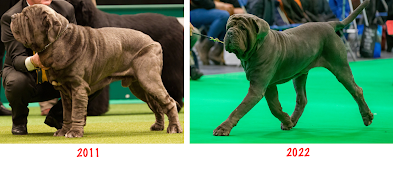
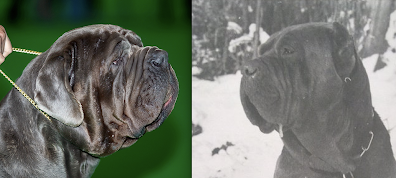
Eleven years ago, I wrote a post featuring the Neapolitan Mastiffs at Crufts 2011. It highlighted the dogs in the ring that year - so horrendous that I headlined it "A Parade of Mutants". 

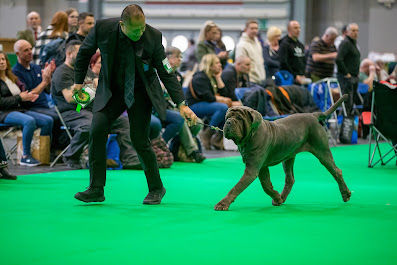
The dog top-left above won Best of Breed that year - just heartbreaking. And the dog on the right won Best of Breed at Crufts today - Tommaso Goffredo's Taro.  It's a world of difference, isn't it? The dog on the right isn't perfect but oh boy he was sound on the move. The picture captures that this dog is comfortable in his own body; not the painfully-hunched bag of excess skin that won in 2011. 

Of course it takes more than a gobby blog to effect change - but it WAS the spark in this breed.  It led to public outrage and the bad publicity made the Kennel Club wince. Breed reps were hauled over the coals by the Kennel Club after Crufts 2011 and told in no uncertain terms that the dogs had to improve. The following year, Crufts introduced vet checks. 

That said, change can't happen if breeders don't step up to the mark - and that's what happened in Neapolitan Mastiffs. One breeder in particular, in fact -  former breed health rep, Kim Slater-Mafi whose husband Mateaki won in the ring today with Tomasso Goffredo's Taro, who is 4.5yrs old.  


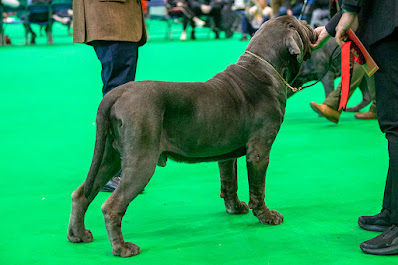
I salute you both  Although I would love you to go further ;-) .  Below, on the left, is your boy, photographed today; in glossy show condition, slobber-free, I can see that his eyes are not red raw as we've seen in the past and.. lovely nostrils!. But check out the Neapolitan Mastiff from the 1970s.  Leaving aside the cropped ears, the dog on the right has such a handsome, noble head. Less skin, cleaner face, better eyes. All the more imposing.

This morning, I put up a post on my campaign group CRUFFA asking people attending Crufts to send in pictures of dogs that catch their eye at this year's show - examples showing improvement and/or those where it is obvious improvement is still needed. I actually do this every year - and every year it provokes outrage from those who feel people should be able to exhibit their dogs at Crufts without me highlighting issues.   "Do your own dirty work and don't expect others to do it for you," wrote one commenter. " "How about you put your energy into helping the dogs in Ukraine?" asked another. 

Many were keen to highlight the 'rules' re photography that are posted on the Crufts website (see here)

Bottom line, Crufts makes it clear that it is perfectly fine for members of the public to take photographs at Crufts and, as it happens,  a condition of entry for exhibitors is that they grant permission to be filmed/photographed for TV/press. 

That said, the Crufts website does does include this extraordinary statement.

No film/photographs/recordings to be taken or published which....may be to the detriment of the dogs taking part in the event, The Kennel Club or any visitors; or which may be prejudicial to the good image of The Kennel Club or which would if made public lead to adverse publicity for The Kennel Club or cause damage to The Kennel Club or bring the reputation of The Kennel Club or its members and/or visitors into question

This is essentially saying that if you, say, got some footage of a judge whacking a dog or a Bulldog dropping dead in the ring (which very sadly happened one year), then you would not be allowed to publish it.  This is at best nonsense and at worst a clear attempt at censorship. Legally enforceable it is not.

Worse, it does the dogs themselves a disservice. Why did the Kennel Club (finally) act on the dreadful half-dog-half-frog German Shepherds? Because one particularly awful one won in 2016 and it got a LOT of publicity.

The footage of the dog moving was edited out of the TV coverage - censored by some Kennel Club hand - but I tracked down the unedited footage and published it here. It got over half a million hits and the resulting outcry finally led to the Kennel Club acting.  The GSD that won Best of Breed at Crufts today is night and day better than the 2016 winner (although there, too, still a way to go).

We all need outside scrutiny to keep us honest. And the dogs sound.


Saturday, 16 October 2021

Crippled GSD wins Best of Breed at French Championship Show

Source


Last month, the above GSD bitch won Best of Breed at the delayed 2020 French Championship in Dijon, France. Am sure she's a lovely dog but, oh boy, that backend 👀 

Perhaps it's just a bad photograph?

Here's the link to the same dog being put through her paces in a working test in August this year - shocking for the the degree of disability that is evident for all to see. Now it's a novice test, but it is also sad to see how unethusiastic/anxious she looks too.


Is there no one in France doing anything about this?

Tuesday, 20 July 2021

TV REVIEW: Britain's Puppy Boom: Counting the Cost


Personally, I think the BBC should have been brave and gone with the original title for this programme: "Will My Puppies Make Me Rich?" But when the programme was announced last November (see here), the dog world lost its shit, convinced the BBC was going to produce a get-rich-quick guide for wannabe dog breeders. The two young women who secured the commission as part of a pitching competition were bombarded with abuse online. Even the RSPCA, which should have known better, called the programme "irresponsible".  

The BBC was forced to put out a statement condemning the abuse and confirming their commitment to producing a well-researched, responsible programme (read that here). But, disappointingly, the Corporation bowed to pressure and changed the title to something that was not going to offend anyone but is rather dull/worthy in comparison.

That matters because it's the very people who might have been drawn in by the original title who needed to see what proved to be a good film.

The programme was always going to include cautionary tales about how breeding dogs can go tits-up - such as the couple who decided to breed their Bull Terrier bitch because it would be nice to have puppies during lockdown and, admitted wife Jo, because "my husband wanted some dollar".

They ended up two grand out of pocket. The bitch, Ginny, needed an expensive emergency C-section; there was only one pup and judging by the way Jo was coo-ing, he may never be sold. "He's outstandingly beautiful," she says, cradling the all-white puppy. All I could think was: I hope the puppy doesn't turn out to be deaf (a significant risk in all-white Bull Terriers).

But of course some people do make money from dog breeding. A lot of money. In Manchester, photographer Rosie who specialises in snapping the currently fashionable bully breeds, told us that some breeders are copping £60k from a single litter of pups. That figure continued to ring in my ears and I suspect in the lugholes of many other too, in spite of the precautionary balance the programme included - which of course is what the welfare organisations and others feared. But the fact is that this kind of breeding is out there and it is a perfectly legit subject for a documentary. I thought it was great, actually, to have the issues raised for the younger, BBC Three audience.

There wasn't much evidence here of "good" breeders, certainly not in the sense touted by the Kennel Club which was thanked in the credits but whose influence was unfelt.  I don't think the KC was mentioned once, perhaps considered as irrelevant by the programme makers as it clearly is to the young breeders who are doing things their way. 

This will have infuriated many traditional breeders who will complain that the programme didn't feature one of their own; instead choosing to feature breeders such as 21-yr-old Hayden,  a young man who had crossed his palms with Silver - the name of his American Bully, who he'd mated with his Old English Bulldog bitch to produce a whopping litter of 12, nine of which survived. 

There was no mention of any health-testing (so presumably none) although the pups looked in chunky good health. Their mum, though, seemed very subdued,  skinny from the effort of raising all those pups and with signs of irritation round her eyes.


Click to enlarge


Presenter, vet Fabian Rivers did not delve too deeply - although perhaps he did and it was edited out by the  programme-makers wary of being too tough on those who had been good enough to speak to them. 

Rivers, who is very personable on screen, did spell out that fashionable breeds can make a big dent in your wallet (in vet fees) way beyond their £3k+ purchase price, but the programme was rather thin on detail about inherited defects - even allowing a Dachshund rescue person to wax lyrical over Dachshunds ("they make absolutely amazing pets") with zero mention that 25% of them suffer from spinal issues that can leave them paralysed or that there are huge concerns about the number of them being bred to meet the current demand.  Still, I guess there's been a previous film or two that has focused on this aspect...😀

The programme was journalistically at its meatiest when it came to exploring canine fertility clinics - a relatively new phenomenon in the UK and currently unregulated. We've been highlighting them on my campaign group CRUFFA for the past three years as they're often run as a profitable sideshoot by breeders who specialise in breeding overdone Bulldogs + Frenchies. 

This was not obviously the case with clinic owner Rosie in Stockport and my hopes were raised when she told Rivers that there were some things she wouldn't do. Aha! So she would not, perhaps, facilitate the breeding of dogs that anyone with eyes in their head should never be bred? Nope, that wasn't the issue.  Rosie just reassured us that, unlike some others, she wouldn't take a £200 artificial insemination fee off unwitting owners when the timing meant there was no chance of puppies. She also told us that a natural tie (you know, when dogs just get on with it without human interference) was "dangerous" - something that should have been challenged given the programme's target audience was people who are new to dog breeding. We do not need a new generation of breeders who think this is normal.

The programme sent an undercover reporter into the biggest fertility clinic chain - SmartBreeder - to attend a course advertised as "being covered by a fully qualified vet". Except the person who ran it - a guy called Dave Holt who was very full of himself - was neither a vet nor a veterinary professional. The camera caught him teaching his students how to draw blood (something that can legally only be done by a veterinary professional in the UK) -  and he also recommended the illegal use of the human mini-pill as a contraceptive in dogs. 

SmartBreeder has yet to issue a formal statement, other than to claim that Dave Holt provides the courses via his own business. I'll add it here if one is forthcoming. 

Regulation of these fertility clinics is way overdue and I hope the focus will encourage the Government into action. Same for the coverage of ear-cropping, incredibly fashionable at the moment, despite being illegal in the UK for more than 100 years.

Britain's Puppy Boom: Counting the Cost is available online now and you can watch it here  - although only if you are in the UK I'm afraid.


Saturday, 8 May 2021

Chihuahuas: shocking new research finds they are full of holes (no really)


You're looking at a CT scan of a Chihuahua featured in a new study from researchers at the Universities of Helsinki and Surrey. The red circles mark where there are holes in the skull exposing the brain underneath and it raises big and urgent questions about the breeding of the world's smallest dog. 

A linked paper from the same authors (currently in pre-print) reports that more than 90% of the Chihuahuas they examined have these holes - known as persistent fontanelles - along what are known as the suture lines of the skull. It's a result of the skull not fusing properly.


The holes are likely linked to the miniaturisation of a breed that can weigh as little as 1.5kg and sometimes less; also to the shape of the skull, which has become shorter and more domed over the years, particularly in show-bred dogs.

The consequence is a high disposition to head trauma. One vet recalls a Chi that died when a tennis ball dropped on its head. Devastating for the kid that threw it.

Until recently, an open fontanelle in the middle of the head (called a molera by breeders) was actually a mark of purity in the breed - a neurological jewel in the crown. Breeders denied there was a problem with them.

Today, the breed-standard demand for a molera has been dropped by all forward-thinking kennel clubs - ie not the American or Canadian KCs, both of which still mention a molera as being permitted in their luddite breed standards. 

In fact, it's very clear from this statement by the Chihuahua Club of America that a molera should not be considered a handicap:.  

"Historically, the Chihuahua developed in Mexico and the United States has displayed a “soft spot” on the top of the head. In the Chihuahua this spot, or fontanel, is known as a MOLERA; and is the same as that found in human babies. In the past, this molera was accepted as a mark of purity in the breed, and it is still mentioned in most Chihuahua breed standards the world over. It is important to note that while many Chihuahua puppies are born without the molera, there are probably just as many born with one and its presence is nothing to become alarmed over. As shown in the illustration below, the molera in a Chihuahua will occur on the top of the head and may vary in shape and size when present." 

Further, it goes on to maintain: "... the presence of a molera does not mean the Chihuahua has a medical problem."

This is what the researchers set out to find out, prompted in no small part by the knowledge that syringomyelia (fluid-filled cavities in the spinal cord) and other brain abnormalities are found in the breed. Hydrocephalus is also common - although it is true that it does not affect every Chi with a persistent fontanelle and breeders fiercely deny that it is linked. 

The UK Kennel Club standard no longer includes any mention of a molera and the FCI standard lists an open fontanelle as a disqualifying fault. Progress.

Indeed, many Chi breeders have recognised that a hole in the head is as undesirable as, well, a hole in the head. In a recent discussion, one UK breeder told me: "The majority of adult Chihuahuas in the UK show ring have no molera at all."

The British Chihuahua Club says: "These days few Chis have permanent molera which persist into adulthood."

But these new papers show that this is not true. The researchers found that even if a central molera is absent, some Chi skulls are littered with these holes, something I imagine is going to come as a shock to most Chi breeders and owners.  

Significantly, the scientists found that persistent fontanelles (PFs) are more numerous and larger in smaller Chihuahuas and they also found an association between PFs and syringomyelia, overcrowding at the junction where the brain meets the neck (known as the craniocervical junction - CCJ) and ventriculomegaly (enlargement of the brain's ventricles). 

The authors write: "Although their concurrent occurrence does not prove causality, our findings suggest that PFs are associated with the occurrence of these structural abnormalities... Because SM and CCJ overcrowding may cause neuropathic pain and motor deficits, our findings challenge the current conception that PFs are a clinically irrelevant finding not associated with other structural abnormalities."

The suggestion is that the dogs may suffer less if we allowed them to be a little bigger - and in the interests of health, we probably need to moderate their heads, too. We know now that excessive miniaturisation is problematic. We know that brachycephaly and domed skulls are a problem, too (the latter now well documented in Cavaliers as being strongly associated with the endemic syringomyelia in the breed).

Many of today's Chihuahuas have domed heads, short, narrow muzzles which leave limited room for teeth/tongues, and foreheads that fall off a cliff into an abrupt, 90 degree stop. Breeders have selected for a short cranium which overcrowds the brain, pushing the structures upwards into the desired "apple-shaped" head.

The UK Kennel Club standard asks for "an apple-dome skull", sets an upper weight limit of 2.7kg (6lb) and suggests a minimum weight of 4lb (1.8kg).

The AKC disqualifies dogs over 6lb (2.72 kg), with no minimum.

The FCI standard disqualifies dogs weighing less than 1kg (2lb 3oz) or more than 3kg (6lb 10oz).

Interestingly, today's show-bred Chi looks very different from the Chihuahuas of old.

This champ dog from 1949 is admittedly rather weedy-looking but note how the forehead flows into his muzzle from both the top and side. Added bonus: his eyes are well-set into his head.


This European modern Chihuahua (over 40 Bests in Show) is an improvement structurally from the neck down but just look at this head - almost a ball, with a sharp stop and a much shorter, stuck-on muzzle that's beginning to look like an afterthought. Not all of today's show dogs have muzzles this short but it is a trend and there really is no historical rationale for it.


Almost unbelievably, the AKC illustrated standard (NB this is a link to a direct download on dogwellnet.com - the only place I could find it online) features these heads as examples of a correct head. I mean.... the bottom right 😱

Pet-bred Chihuahuas  split into two camps - tiny"teacup" Chihuahuas bred by breeders with zero regard for health and bigger/heavier dogs (often up to 10lbs) which tend to  have less extreme heads and longer muzzles. When breeders are not actively selecting for small size, nature tries to normalise. 

The dogs with more moderate heads/longer muzzles are often referred to as "deer-head" Chihuahuas. It's a term show breeders loathe. ("There's no such thing - it's not a Chihuahua if it doesn't have an apple-shaped head"). These dogs would never win today, but they were the predominant type in the early show-ring.

'There is little doubt the Chihuahua has improved since the breed was first recognized by the AKC in 1904," write two American doyennes of the breed here. 'Chihuahuas shown prior to 1940 were generally of the "deer" or "fawn" type, a bit leggy and longer bodied, and - too frequently, roach backed. Also, well into the 1930's the breed was still showing the results of mixed breeding. The year 1940 brought a marked change for the better, with more breeders recognizing the true Chihuahua type. The strength of the Chihuahua rests entirely in the hands of the dedicated breeders who strive, with each breeding, to produce dogs meeting the breed standard. We think this is a pretty good testimony of the Chihuahua today!'

Nevertheless, "deer-head" Chis are the ones still found in much of Mexico  - and they tend to be more popular with pet owners not involved in the pursuit of rosettes. It is also impossible to find anything like the dogs above in the photographic archive.


The closest I can find is this 1903 dog featured in the book "British Dogs" by WD Drury.


I posted this graphic on CRUFFA a few weeks ago to illustrate the difference.  NB: I'm reliably informed the Crufts winner posted top left does not have an obvious fontanelle - certainly not one that can be felt by a judge. The skulls beneath are from a dog with the same type of head that did have a molera. 


The Chi breeders on CRUFFA objected to me calling the dog on the right a "deer-head", saying the dog still has an apple-shaped head. They did however recognise the dog as a Chihuahua (not always the case when I post more moderate dogs) and although a dog like this would not win in the show-ring today, it gave me some hope that show-breeders could be persuaded to to start selecting for a more moderate head like this one. Aesthetically it is so much more attractive.

The KC's Breed Watch scheme does ask judges to monitor the following in Chis:


Incorrect dentition
Wry jaw
Retained puppy teeth
Misplaced teeth
Protruding tongue as a result of incorrect teeth
Missing teeth
Incorrect bites
Excessively short muzzles

But here's the bitch that won BOB at Crufts in 2019.


This bitch's head makes me wince. There's a significant indent between her eyes (which of course helps give her the desired apple-shaped head) and the muzzle shoots off at less than a 90 degree angle. The tear-staining also suggests a problem with tear-drainage, often seen in Chihuahuas and other brachy breeds and linked to the skull confirmation/shallow eye sockets. Dogs' eyes shouldn't weep.


"Frontal bossing" is a medical term used to describe a prominent forehead and it is often seen in Chihuahuas. In humans - and dogs - it is associated with a number of genetic abnormalities (see here). It is also associated with Hydrocephalus, one consequence of the enlarged brain ventricles documented in Chis in this new study.

But back to the problem of those holes in the skull.

In their upcoming paper, the authors conclude:

"[Persistent fontanelles] are almost ubiquitous in the examined group of Chihuahuas. They are located at dorsal, lateral, and caudal surfaces of the cranium, and hence are not all recognized reliably by palpation in adult dogs. Though the pathogenesis of the PFs described here is unknown, bone-deficient lesions may occur due to congenital defects in cranial bone ossification, delayed closure of cranial sutures, or bone resorption, as is observable in children with craniosynostosis (premature cranial suture closure). Because the imaging findings described in the Chihuahuas of this study are similar to findings among children with craniosynostosis/premature cranial base synchondrosis closure, this growth disorder may be a predisposing factor for the PFs described here."

Research comparing apple v deer-heads in terms of predisposition to persistent fontanelles or neurological issues has not been done.  We also have no way of knowing how numerous PFs have been in the breed historically - clearly at least one has been a mark of the breed for a long time.  

This skeleton, dating from 1910, shows a Chihuahua skull with several holes in it. 


There were no really tiny "teacup" dogs in this study cohort - the smallest dog in the study was 1.4kg (and the largest 4.3kg), and it would be good to look at those too (there's certainly a rationale for thinking that their skulls could be even worse). 

It should also be said that persistent fontanelles have been documented in other toy breeds such as Yorkshire terriers (although there are no studies elucidating how common they are). This suggests that they are likely a consequence of miniaturisation. 

The authors conclude: "Further studies are necessary to evaluate the pathogenesis and clinical relevance of these lesions."

You bet your bippy and as a matter of urgency - hopefully funded and supported by kennel clubs and breeders. If breed standards, or the interpretation of them, are found to be the cause, major changes in the breed must follow.  

References